Plantar Fasciitis Tips

June 3, 2024

A jagged dark mass curves beneath a bright, white background.

Plantar fasciitis is common among our Axio clients. Personally, I have dealt with it off and on for over 10 years. At times it can be very painful and difficult to find relief. I’ve personally researched and talked to many physical therapists about tips and tricks to help with plantar fasciitis. 

Recently, my plantar fasciitis flared up again. When it does, there are now only three things that I do:

1.        Stretch- stretching is by far the most helpful for me. And by stretching, I don’t mean stretching the bottom of your foot a couple of times per day. I intentionally keep my foot stretched all the time. If I’m sitting at a table, I’ll stretch it on a table leg. When I’m on the couch, I’ll keep it stretched against the coffee table. Or if I’m standing for long periods of time, I find some sort of object or incline to keep my foot stretched. A physical therapist gave me this advice because when your foot is stretched, your plantar fascia cannot tighten up. 

2.        Rest- I love to walk and run. But rest really is important to overcome plantar fasciitis. However, resting your foot doesn’t mean you have to rest from exercise. You can still swim, bike or use a row machine to get your cardio! But intentionally resting from walking, jogging, or standing for too long will give you significant relief in just a few days. 

3.        Ice- Rolling your foot on a frozen water bottle can also help give you relief. However, the first time I got plantar fasciitis I was constantly rolling my foot on frozen water bottles, golf balls, or anything else I could try to get back to normal. My sister, who is a doctor, suggested I just try to leave it alone for a little while. That helped! So, I think I’ve learned that doing too much rolling and massaging isn’t good either. Consider ice or roll your foot occasionally, but not so much that it is always tender. 

Along with these three tips, the proper shoes are very important. Typically, supportive shoes with a little elevated heel and a big toe box are best. There are shoes of all styles designed specifically to help with plantar fasciitis. Check reviews before purchasing footwear but try to have the proper shoes for every occasion, not just for exercise. 

At Axio Fitness we can also offer stretch therapy sessions specifically designed to help heal plantar fasciitis. We can massage and stretch the foot, ankle and calf for relief and healing. 

Share Post

Our Recent Blogs
September 14, 2026
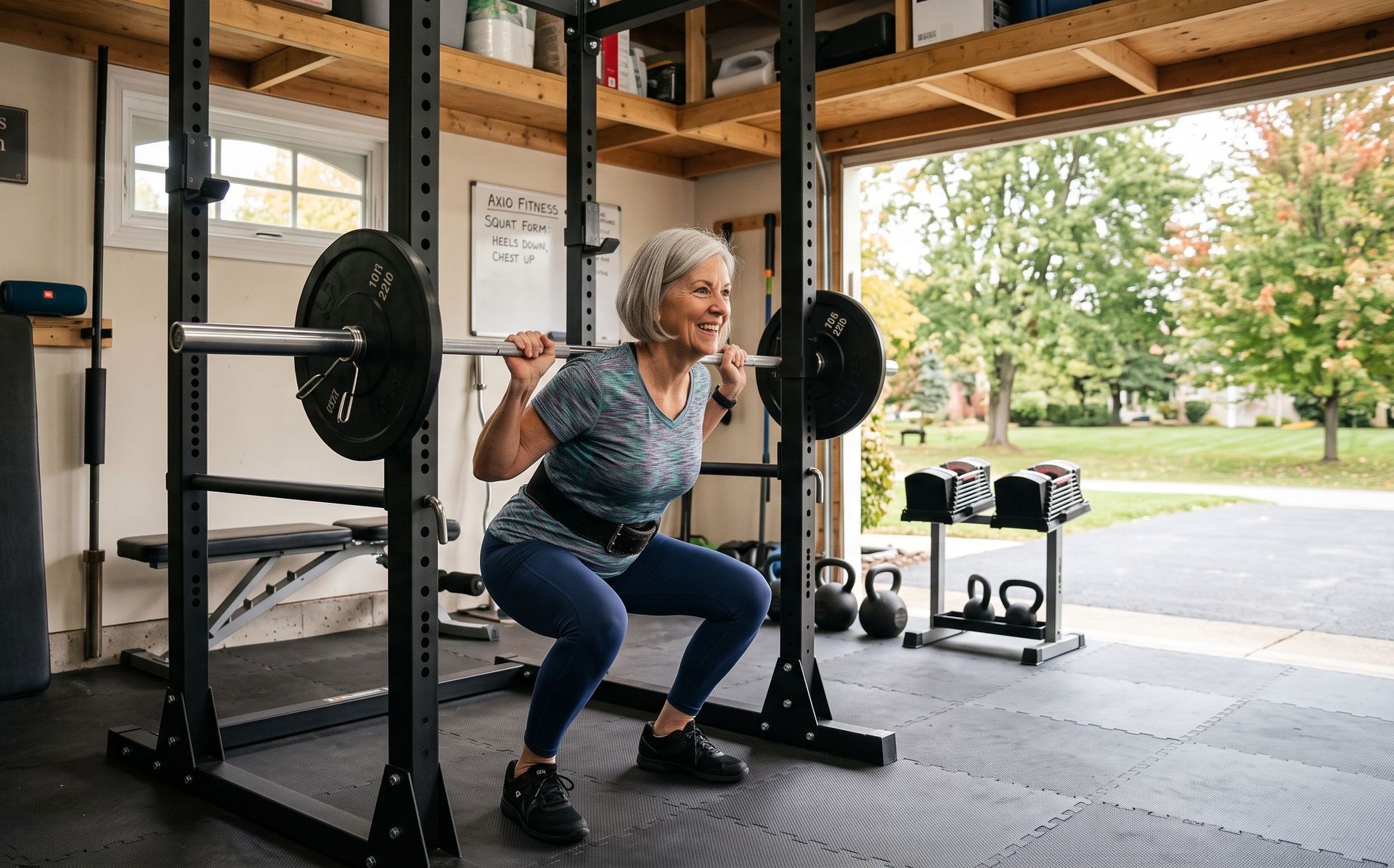
The squat is the king of lower-body exercises, but poor form can stall your results or cause injury. Here are three common squat mistakes and quick fixes to improve your technique today. Knees Caving Inward (Valgus Collapse) The Mistake: Your knees collapse inward as you drive up from the bottom of the squat, placing unnecessary stress on the knee joint. The Fix: Screw your feet into the ground and actively push your knees outward so they track in line with your second toe. Heels Lifting Off the Floor The Mistake: Shifting your weight onto your toes causes your heels to rise, reducing power and straining the Achilles tendon. The Fix: Drive your weight back into your heels and mid-foot. If ankle mobility is tight, elevate your heels slightly on small weight plates. Rounding the Lower Back (The "Butt Wink") The Mistake: Losing a neutral spine at the bottom of the movement tucks the pelvis under, stressing the lower back. The Fix: Brace your core like you are about to take a punch, sit back into your hips, and only squat as deep as your form allows without rounding.  Fixing these small cues will protect your joints and help you build strength faster. If you need help with proper exercises for progress, Axio Fitness is here to help.
August 24, 2026
Just like lifting weights strengthens your biceps, getting your heart rate up trains your cardiovascular system. Your heart is primarily made of cardiac muscle tissue, and regular physical activity challenges it to adapt, grow stronger, and operate far more efficiently. When you engage in aerobic exercise—like brisk walking, running, cycling, or swimming—your working muscles require more oxygen. To meet this demand, your heart must pump blood faster and harder. Over time, this consistent workload causes the heart’s main pumping chamber (the left ventricle) to expand slightly and build stronger muscular walls. With each contraction, a conditioned heart can push out a larger volume of blood—a measurement known as stroke volume. Because it delivers more blood per squeeze, it doesn't have to beat as frequently to keep your body supplied with oxygen. Key Benefits of a Stronger Heart Lower Resting Heart Rate: A efficient heart pumps more blood per beat, allowing it to beat fewer times per minute while you rest. Reduced Blood Pressure: Stronger heart muscles pump blood with less effort, reducing force on your arterial walls. Enhanced Endurance: Better oxygen delivery means everyday activities like climbing stairs feel significantly easier. Lower Cardiovascular Risk: Regular exercise improves circulation and helps prevent arterial plaque buildup, drastically reducing the risk of heart disease and stroke.  Investing just 150 minutes of moderate activity a week builds a resilient heart that supports a longer, healthier life.
August 17, 2026
Strength Through Menopause Perimenopause and menopause bring wild fluctuations in estrogen and progesterone. That hormonal roller coaster can cause brain fog, stubborn weight gain, mood shifts, and sleep loss. While cardio is great for endurance, picking up heavy weights is a powerful movement habit for balancing your midlife hormones. As estrogen drops, muscle mass declines and insulin sensitivity decreases. Lifting weights changes the game: Tames Insulin Spikes: Muscle acts as a sponge for glucose. Building lean muscle improves insulin sensitivity, keeping blood sugar stable and reducing abdominal fat storage. Lowers Cortisol: Overdoing cardio sessions can elevate cortisol (the stress hormone), driving weight retention. Short, focused resistance training helps regulate cortisol levels instead of spiking them. Protects Bone Density: Estrogen loss accelerates bone loss. Progressive overload from weights signals your bones to lay down new tissue, keeping osteopenia at bay. Boosts Mood and Human Growth Hormone (HGH): Heavy lifting triggers endorphins and stimulates natural HGH production, improving energy, deep sleep, and mood stability. You don't need to spend hours in the gym. Two to three strength workouts each week will give you the benefits you need. By prioritizing strength over endless cardio, you work with your changing biology rather than against it. Axio Fitness can give you the accountability and direction you need to get started on a strength training routine. 
July 21, 2026
Strength Training for your Brain While people usually think of "brain exercises" as crosswords or Sudoku, lifting weights triggers a cascade of chemical reactions in your body that directly build and protect your brain. The Secret: Brain-Derived Neurotrophic Factor (BDNF) When your muscles contract against resistance, they release signaling molecules into your bloodstream that cross into the brain. The most critical of these is BDNF—often called "Miracle-Gro for the brain." BDNF does three crucial things: Stimulates neurogenesis: It helps your brain grow brand-new neurons (brain cells). Protects existing neurons: It acts like armor against cognitive decline, dementia, and Alzheimer's. Strengthens synapses: It strengthens the connections between brain cells, which directly improves how fast you learn and recall information. Resistance Training can also support your memory: While cardio is great for general blood flow, studies show that progressive resistance training specifically targets the hippocampus—the brain's command center for memory and complex learning. In fact, research published in Archives of Internal Medicine showed that older adults who participated in resistance training twice a week for six months not only slowed cognitive decline but actually improved their spatial memory and executive function (the ability to plan, focus, and multitask). If you need help getting started on a proper strength training program, Axio Fitness is here to help.
More Posts

Leave a Reply

Your email address will not be published.

Required fields are marked *

Save my name, email, and website in this browser for the next time I comment.